From intelligence to intervention: what New Zealand's National Surveillance and Warning Capability means for subsea cable protection

1. The end of the benign seabed: Why AIS monitoring is no longer enough: How the operating environment for subsea cables is changing, and why AIS monitoring and geofencing alone are no longer enough.
2. The threat you can’t see vs the sensor you already own: How sensors such as Distributed Acoustic Sensing (DAS) can help detect vessels and activity that conventional maritime monitoring cannot see.
3. Intelligent prevention: A new approach to subsea cable protection: How combining multiple sources of maritime intelligence can identify elevated risk before an incident occurs.
4. Closing the loop: From intelligence to intervention: How intelligence reaches the organisations able to assess the situation, coordinate a response, and intervene while there is still time to prevent damage.
Identifying elevated risk is only part of protecting subsea cables. To be effective, it has to reach the organisations able to assess the situation, decide on the appropriate response, and intervene while there’s still time to prevent damage. New Zealand has demonstrated what that final layer looks like in practice.
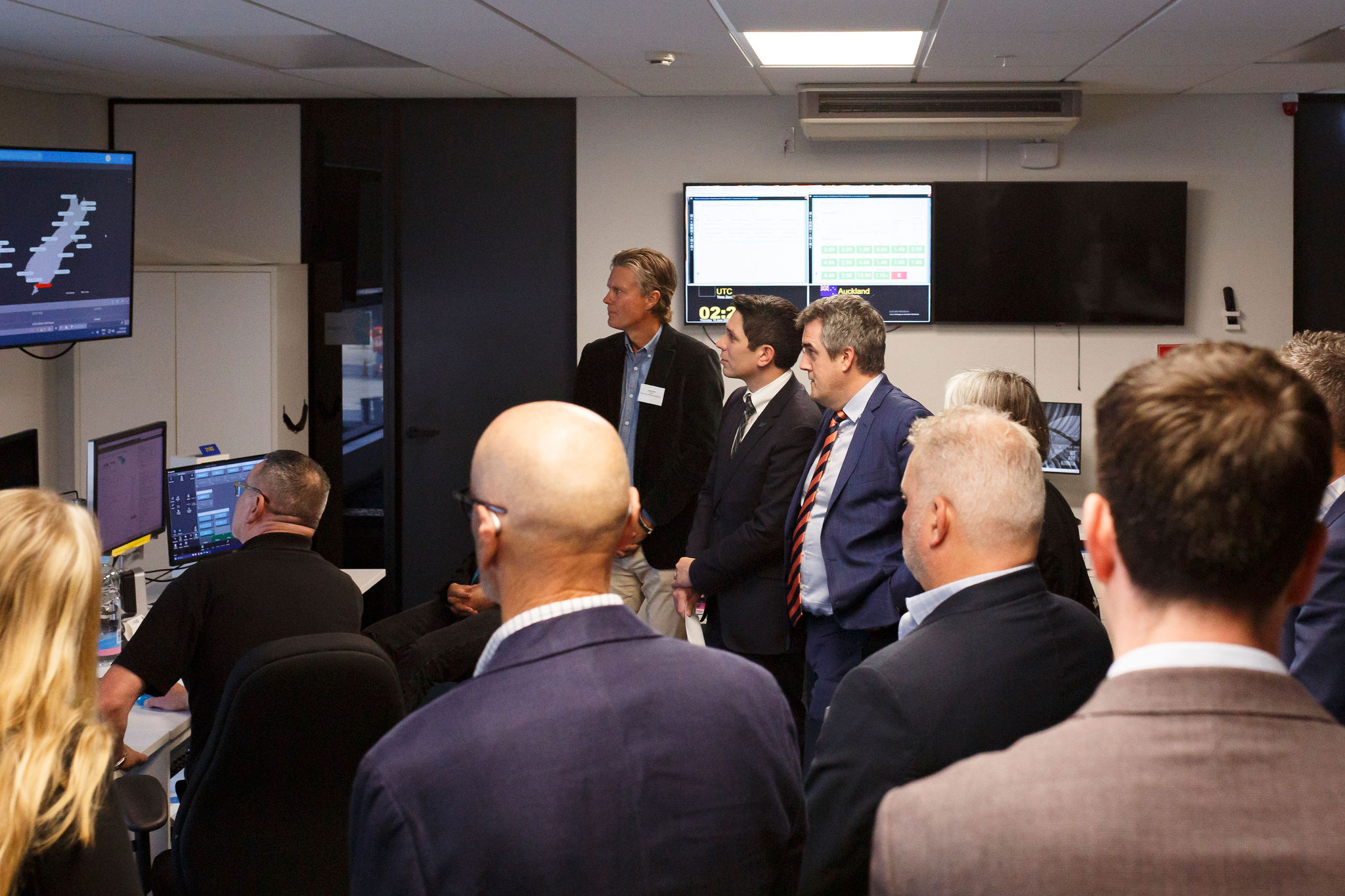
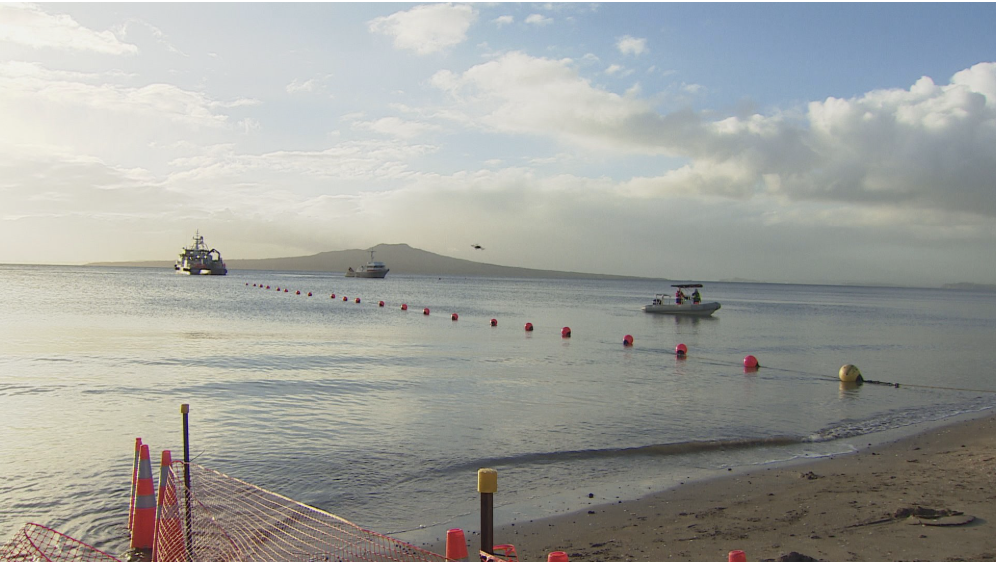
In June 2026, New Zealand launched the National Surveillance and Warning Capability (NSWC) to safeguard its critical underwater infrastructure (CUI). It brings together cable operators, government agencies, and the Kordia Maritime Operations Centre (MOC) to monitor cable protection zones (CPZs) across the country, enabling coordinated intervention when vessel activity poses a threat.
Rather than operating independently, each organisation works from the same assessed information in real time. Elevated risk can be identified, understood, communicated, and acted on as a single coordinated operation rather than a series of disconnected activities.
The capability uses Starboard to continuously analyse vessel movements around New Zealand's CPZs, combining real-time vessel tracking with behavioural analysis to distinguish routine maritime activity from behaviour that presents risk.
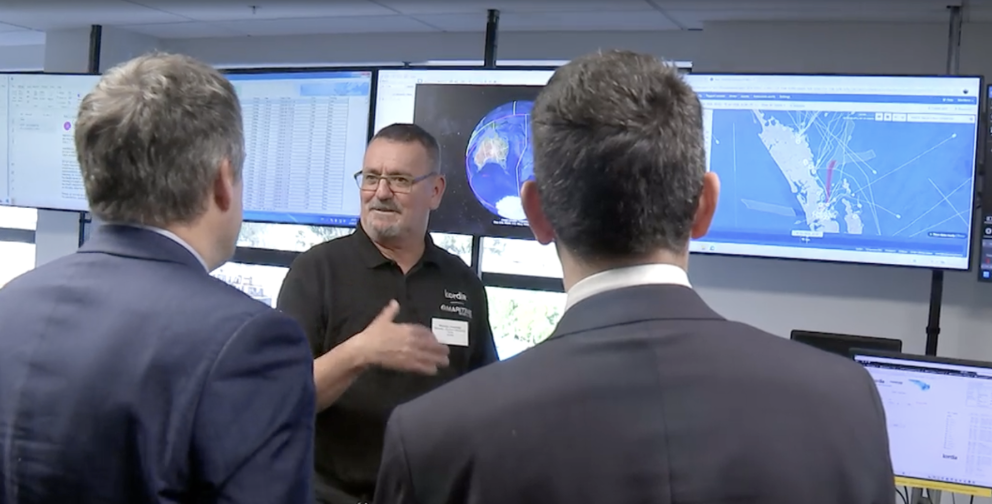
When a vessel enters a protected area or begins exhibiting high-risk behaviour, the system immediately alerts operators in Kordia's MOC. Because every organisation involved is working from the same common operating picture, they can assess the situation simultaneously, determine the most appropriate response, and coordinate intervention without delays caused by fragmented information or multiple reporting chains.
Where appropriate, watch officers contact the vessel directly to remind the master of their legal obligations and request that they alter course or cease the activity. If the warning is ignored, the incident is immediately escalated to the relevant maritime authorities for enforcement action.
The system compresses a complex sequence that would normally take hours into a matter of seconds. By letting Starboard handle the constant scanning, filtering out false alarms, and pre-arranging the communication channels, Kordia operators don’t waste any time debating what to do and can quickly execute the final, critical steps. This workflow gives maritime teams a comfortable window to warn a skipper before an anchor is ever dropped.
The technologies used to monitor cable routes are well established. AIS, Distributed Acoustic Sensing (DAS), State of Polarisation (SOP), and geofencing all contribute to understanding activity around critical infrastructure. The challenge is connecting that intelligence with the organisations able to act on it.
For much of the internet era, cable protection was largely the responsibility of infrastructure owners. Operators monitored their networks using their own systems, while the maritime organisations able to contact vessels operated separately. Information moved between organisations, but often only after a fault or reported incident.
The separation limited opportunities to prevent damage. The organisation that identified a developing risk often couldn't intervene, and those with the ability to respond didn't always have access to the same information at the same time.
The NSWC resolves this by introducing a common operating picture and a workflow for assessment, escalation, and vessel contact. Rather than maintaining separate operational views, each party can assess the same information as events unfold and coordinate their response accordingly.
Each organisation contributes its own expertise while working from the same assessed information.
Throughout this four-part series, I've argued that the objective of subsea cable protection should be reducing the time to detect and deter, not simply reducing the time to repair.
The NSWC is designed around that principle. Every component of the capability contributes to shortening the time between detecting a developing threat and coordinating an operational response.
Starboard identifies elevated risk accurately and at speed. A common operating picture reduces the time needed to understand the situation. Clearly defined workflows reduce the time needed to decide how to respond, while established communication channels reduce the time needed to contact a vessel or escalate an incident.
Rather than relying on information moving between separate organisations, the capability enables cable operators, the MOC, and government agencies to assess the same information simultaneously and coordinate intervention before damage occurs.
For cable operators, that additional time can make the difference between a routine radio warning and a costly repair operation. Avoiding even a small number of incidents reduces repair costs, protects service availability, and helps preserve limited global cable repair capacity.
Subsea cables carry around 99% of New Zealand's international data traffic. A single incident has the potential to cause nationwide digital disruption for businesses and communities, and repair logistics are notoriously difficult, slow, and costly.
Responsibility for New Zealand’s CUI is split between cable owners and the government. Cable owners own and maintain the physical assets, invest in upgrades, and bear the financial cost of repairs. Government agencies establish the regulatory framework, oversee maritime safety, and have the operational authority to communicate with or intervene when vessels threaten protected infrastructure. They both bear the burden if a cable outage occurs and neither can achieve effective prevention alone.
The NSWC brings those complementary responsibilities together around a common operating picture, enabling a n efficient coordinated approach to decision making and intervention.
The result is better surveillance and a more effective operating model for protecting CUI.
The NSWC serves as a blueprint for a global shift toward intelligent prevention.
In many countries, commercial organisations own CUI while government agencies hold the authority or operational capability to protect it. The information needed to identify and respond to risk often sits across cable operators, maritime agencies, regulators, and security organisations rather than with a single organisation.
Legal frameworks vary. Not every government has specific powers to stop a vessel fishing or anchoring over a cable. Most can, however, contact a vessel through an official maritime channel. In many cases, that is enough to prompt a master to change course or behaviour before damage occurs.
The NSWC demonstrates how existing organisations can work together more effectively by sharing intelligence, operating from a common operating picture, and following agreed operational workflows. Those principles can be adapted to different legal, regulatory, and operational environments without requiring every country to replicate New Zealand's model exactly.
Intelligent prevention is a multi-layered framework designed to move the industry from reactive monitor-and-repair approaches to proactive, intelligence-led protection. The first layers form the brain of the system by turning large volumes of complex ocean data into a single operational view. The final layer is ensuring that intelligence reaches the organisations able to act while there’s still time to prevent damage.
The NSWC demonstrates how that final layer can operate in practice. No single technology prevents cable faults. Effective protection depends on a capability that enables each organisation to fulfil its responsibilities as part of a coordinated response using intelligence as the catalyst for timely, informed intervention. As threats to CUI continue to evolve, the future of subsea cable protection will depend not only on seeing more, but on enabling the right organisations to act together at the right time.
Learn more about how Starboard is the common operating picture for the maritime world.